

Best Soft Gel Essentials for Salons: 2026 Guide
Table of Contents
- Quick Comparison: Best Soft Gel Essentials for Salons
- Soft Gel vs Hard Gel: Which System Belongs in Your Salon?
- Kokoist Mega Stick Base Gel: The All-Around Adhesion Pick
- Sofgel Rubber Base Gels: Clear, Astra, Leo and Silk Compared
- Sofgel Pro Tip Extension Gel: One Bottle for Full-Cover Tips
- Nail Prep Products for Gel Nails: Purity, Commit and EnVogue Base
- Soft Gel Tip Application Steps That Protect the Apex
- Choosing a Gel Nail Lamp for Salon Use
- Frequently Asked Questions
Last Updated: October 21, 2026
Quick Comparison: Best Soft Gel Essentials for Salons
The best soft gel essentials for salons are the ones that hold their structure through a full service week, not just a single client. At Hotlines Beauty, we stock soft gel systems for exactly that reason: adhesion first, then flexibility, then speed. The products below cover the four jobs every salon chair demands: base adhesion, overlay structure, tip extension, and prep.
Here's the shortlist we'd hand a new technician on day one:
| Product | Price | Job It Does | Best For |
|---|---|---|---|
| Kokoist Mega Stick Base Gel | $25.00 | Base adhesion with flexibility | Any nail type, all-around pick |
| Sofgel Rubber Base Clear | $23.00 | Clear overlay or SOFTIP refill | Natural nail grow-outs |
| Sofgel Rubber Base Astra / Leo / Silk | $23.00 | Overlay with built-in color | Clients wanting color plus structure |
| Sofgel Pro Tip Extension Gel | $28.00 | Full-cover tip application | Extension services |
| Luminary Purity Essentials | $17.00 | Cleanser and dehydrator | Every service, step one |
| Luminary Commit Primer | $17.00 | Extra adhesion insurance | Clients prone to lifting |
| Luminary Top Coat | $16.00 | High-shine finish | All soft gel sets |
| EnVogue Base Coat | $17.00 | HEMA-monomer free base | Sensitive clients |
Below, we break down what each one actually does in the chair, and where it falls short.

Soft Gel vs Hard Gel: Which System Belongs in Your Salon?
Most soft gel guides stop at the definition: soft gel is flexible and soaks off in acetone, hard gel is firmer and generally requires filing for removal. That is true, but it does not help a salon owner decide what to stock. The gap in competing content is a decision framework by service and client nail type. This section provides one.
The core mechanical difference
Soft gel bends with the natural nail. That flexibility is why it is forgiving on thin, damaged, or flexible nail plates and why removal stays gentle. Hard gel holds a sculpted shape longer and resists acetone, so removal means filing down. Neither is universally better; they solve different problems.
Decision guide by service and client nail type
| Service or client situation | Recommended system | Why |
|---|---|---|
| Natural nail overlay on thin or flexible nails | Soft gel rubber base or soft builder gel | Flexes with the plate, reduces lifting stress, soaks off gently |
| Full-cover soft gel tip extension | Soft gel tip extension gel plus soft builder | Designed for tip adhesion and controlled application |
| Short extensions on active clients | Soft gel with adequate apex structure | Flexibility absorbs impact better than rigid hard gel on short lengths |
| Long sculpted extensions | Hard gel or a structured soft gel system rated for length | Rigid structure holds length; soft gel may flex and stress at the apex |
| Clients who lift easily | Soft gel base with a primer step | Gentle removal lets you reset without repeated filing damage |
| Clients who want maximum wear between fills | Hard gel | Resists acetone and holds shape longer between appointments |
| Sensitive clients or those avoiding HEMA monomers | HEMA-monomer free soft gel base | Formulated for adhesion without the monomer some clients react to |
| Clients who change color frequently | Soft gel overlay with colored rubber base | Soak-off removal makes color changes fast and non-damaging |
How to run both systems without doubling your station
The practical salon answer is not to choose one system forever. Run soft gel as your default for overlays, full-cover tips, and gel manicures, and keep hard gel for clients who specifically need maximum structure or long sculpted length.

If your client list skews toward natural nail growth, shorter extensions, and frequent color changes, soft gel is the system to build around.
Kokoist Mega Stick Base Gel: The All-Around Adhesion Pick
Kokoist Mega Stick Base Gel is the base we reach for first because it balances adhesion, durability, and flexibility before and after soak-off.
What makes it work is the flexibility.
The trade-off: at this price, you don't want to waste it on practice sets.
Pros: strong adhesion, flexible after cure, works across nail types. Cons: highest price point on this list, so budget accordingly.
Sofgel Rubber Base Gels: Clear, Astra, Leo and Silk Compared
Sofgel Rubber Base Gels are medium-viscosity soft builder gels for overlays and SOFTIP refills, and all four shades sit at $23.00.
The three colored versions replace a separate color coat.
One limit to know: Clear cannot be used for sculpted extensions. It's an overlay and refill product, not a sculpting gel.
Pros: one bottle for structure and color, medium viscosity self-levels, four shades cover most requests. Cons: clear version is overlay-only, no sculpting.
Sofgel Pro Tip Extension Gel: One Bottle for Full-Cover Tips
Sofgel Pro Tip Extension Gel is an all-in-one, HEMA-free soft gel built for SOFTIPS full-cover extensions.

The medium viscosity formula reduces gel spillage, which matters most during full-cover tip application, where a run into the sidewall ruins the set.
If you run extension services, this is the bottle that keeps your station simple. If you don't, skip it.
Pros: multi-use, HEMA-free, controlled application on full-cover tips. Cons: only worth the price if extensions are a regular service.
Nail Prep Products for Gel Nails: Purity, Commit and EnVogue Base
Prep decides whether the set lasts. Luminary Purity Essentials ($17.00) is a 99% isopropyl alcohol cleanser and dehydrator that removes dust and oil after prep and replaces two separate bottles. Luminary Commit Primer ($17.00) adds adhesion insurance: apply to tips and free edge for soak-off manicures, or two coats before gel on overlays.
EnVogue Base Coat ($17.00) is a HEMA-monomer free soft gel base for maximum adhesion across all nail types, applied thin and even over fully dried prep.
Soft Gel Tip Application Steps That Protect the Apex
Full-cover soft gel tips fail at the apex more than anywhere else. Here is the sequence we recommend:
- Prep and dehydrate the natural nail with Purity, then let it dry fully.
- Apply Commit to the free edge if the client lifts, curing as directed.
- Size the full-cover tip to the nail, checking sidewall fit before any gel.
- Apply Pro Tip Extension Gel to the tip interior with controlled pressure to avoid spillage.
- Place the tip at a slight downward angle and press from the center out.
- Flash-cure while holding the tip to lock position, then fully cure.
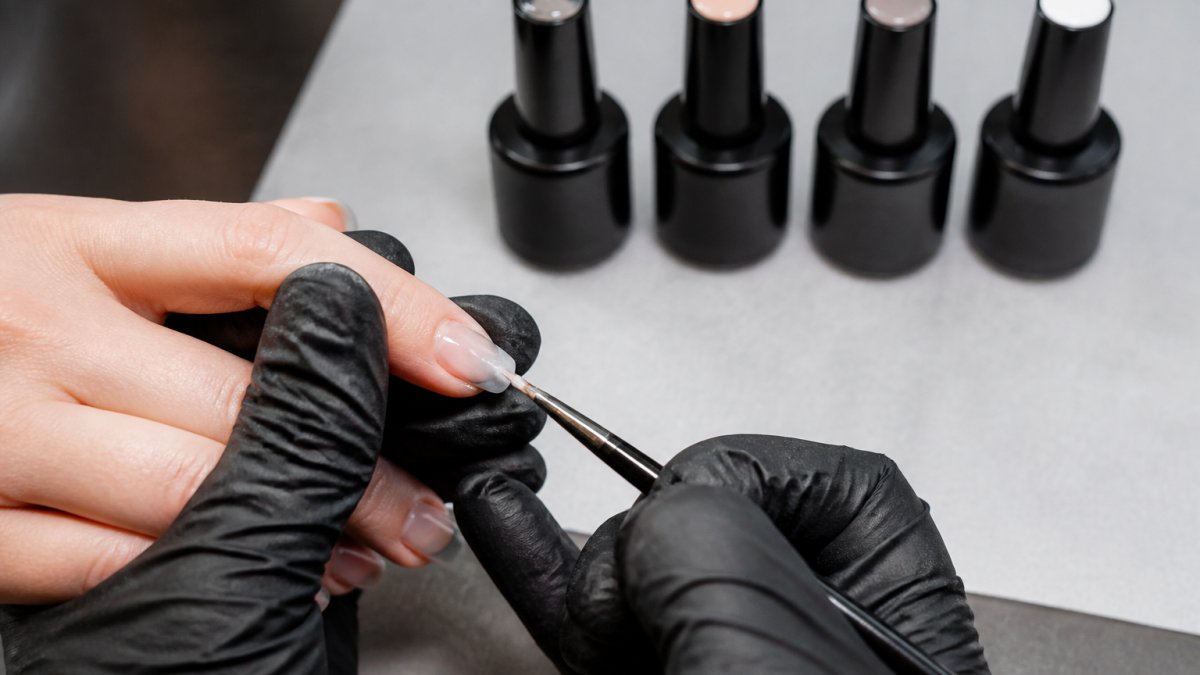
- Refine the apex with a liner brush before final cure, then top coat.
The apex is the stress point. Keep enough structure there without building a ridge, and the tip holds.
Choosing a Gel Nail Lamp for Salon Use
A salon gel lamp is not a generic accessory you buy once and forget. It is the variable that decides whether every soft gel product on your shelf performs as formulated. The competitive gap in most soft gel buying guides is exactly here: they list products but never explain how the lamp and the gel system must match. This section closes that gap with a practical compatibility and safety framework.
Match the lamp to the gel system, not the other way around
Every soft gel product is formulated for a specific cure window. Kokoist, Sofgel, and Luminary each publish recommended cure times for their bases, builder gels, and top coats, and those times assume a lamp with adequate output in the correct wavelength range. The practical rule: pick your gel system first, then confirm your lamp meets that system's stated requirements. If you reverse the order, you end up extending cure times to compensate for a weak lamp, which is a recipe for under-cured inhibition layers and mysterious lifting.
What actually matters in a salon lamp
- Wavelength coverage. Most modern soft gel systems cure under 365 nm and 405 nm LED. A lamp that only emits one wavelength may under-cure products formulated for the other. Check the product's technical data, not the lamp marketing copy.
- Consistent output across the whole hand. A lamp that cures the center fingers well but leaves the pinky and thumb under-exposed creates inconsistent wear that clients notice within a week. Reflector design and interior mirror placement matter more than peak wattage claims.
- Sidewall and free-edge reach. Soft gel tips and overlays fail at the sidewalls and apex first. A lamp with a low-profile interior or open sides lets you angle the hand so those stress areas get direct exposure.
Under-curing: the silent cause of lifting and chipping
Under-curing does not always look like wet gel. More often it shows up as a slightly tacky inhibition layer that seems normal, followed by lifting at the cuticle or chipping at the free edge within five to seven days. A common pattern in busy salons is a lamp that cured perfectly a year ago but now under-cures because LED output degrades gradually with age and heat.
A simple lamp maintenance schedule
- Wipe the interior reflector and bulb cover weekly; dust and gel spatter reduce output.
- Rotate or replace lamps on a manufacturer-recommended schedule rather than waiting for failure.
- Keep a spare lamp on the floor so a mid-service failure does not cancel appointments.
Frequently Asked Questions
What products and tools do salons need for soft gel nails?
A working soft gel setup starts with a base layer, a structure or extension gel, a top coat, and prep chemistry. On the Hotlines Beauty catalogue that means a base such as Kokoist Mega Stick Base Gel or EnVogue Base Coat, a rubber base like Sofgel Clear for overlays, Sofgel Pro Tip Extension Gel for full-cover tips, Luminary Top Coat, and Luminary Purity as your cleanser and dehydrator. Add a lamp matched to your gel's cure time, a liner brush, and files. Stock one system fully before adding colours.
What is the difference between soft gel and hard gel?
Soft gel stays flexible and comes off with soak-off remover, which makes it the practical choice for rubber base overlays and full-cover soft gel tips. Hard gel is firmer, does not soak off, and needs filing to remove. For salon clients who want to grow out their natural nails, a soft gel overlay gives slight thickness protection without locking them into a file-off removal. Hard gel suits sculpted extensions and clients who want maximum strength, but it demands more filing skill.
Which lamp is suitable for curing soft gel products?
Match the lamp to the gel's stated cure time rather than guessing. Luminary Top Coat specifies 60 seconds under LED, while Sofgel Rubber Base Silk directs a 30-second cure per layer. A salon-use LED lamp with even coverage across all five fingers matters more than wattage claims, because uneven output causes lifting at the sidewalls. Check that your lamp fits the full hand and that you can cure the thumb separately if the arch blocks light.
How do you properly apply soft gel tips?
Prep first: cleanse and dehydrate with Luminary Purity, then apply Commit Primer to the free edge for extra insurance against lifting. Apply Sofgel Pro Tip Extension Gel to the full-cover tip, press it onto the nail at a 45-degree angle to push out air, and hold until it grabs. Keep the gel medium viscosity so it does not spill onto the sidewalls. Cure, then refine the shape and finish with top coat. Build the apex slightly forward of the stress area to prevent cracking.
Is it cheaper to buy soft gel essentials locally than to keep paying shipping?
It depends on order size, but the maths is simple. Hotlines Beauty prices run from $16 for Luminary Top Coat and $17 for Purity, Commit Primer and EnVogue Base Coat up to $28 for Sofgel Pro Tip Extension Gel, with free local delivery on qualifying orders from a $20 minimum. If you order two or three items at once, you clear the threshold and skip shipping entirely. Compare that against your current per-order shipping cost across a month of restocks.
Building a soft gel service that holds up takes the right base, the right prep, and a lamp you trust. Hotlines Beauty carries the full range, from Kokoist Mega Stick Base Gel and the Sofgel Rubber Base lineup to Luminary prep and top coats, with free local delivery on qualifying orders. Browse the catalog and stock your station with products built for professional results.