

How to Remove Soft Gel Nails: Safe At-Home Guide
Table of Contents
- What You'll Need Before You Start
- Step-by-Step: How to Remove Soft Gel Nails
- How Long to Soak Off Soft Gel
- Best Tools for Gel Nail Removal
- How to Prevent Nail Damage After Gel
- Common Mistakes That Cause Peeling and Nail Plate Damage
- Safety First: Ventilation and Acetone Handling
- Frequently Asked Questions
Last Updated: September 28, 2026
What You'll Need Before You Start
Removing soft gel nails at home is safe with the right supplies and a little patience. Soft gel polish, also called soak-off gel, dissolves in acetone, making it far easier to remove than hard gel or acrylics, which need filing or drilling.
Gather these items before you begin:
- 100% pure acetone
- Cotton balls or acetone-soaked pads
- Aluminum foil, cut into squares
- A coarse grit nail file (180 grit)
- A buffer block
- An orange stick or cuticle pusher
- Cuticle oil and a rich hand cream
- A soft towel and a well-ventilated space
Step-by-Step: How to Remove Soft Gel Nails
The full process takes 20 to 30 minutes. Rushing any step causes peeling, white spots, and a damaged nail plate. Follow these three steps in order and check your progress as you go.
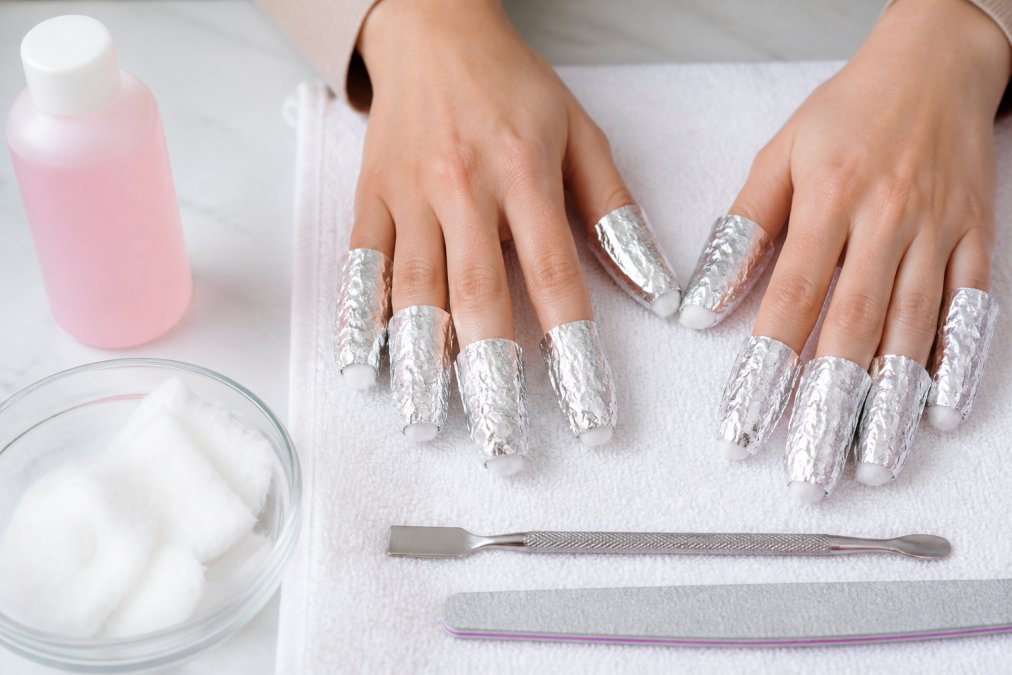
Step 1: File and Buff the Top Coat
Break the seal first. The top coat on soft gel nails is the hardest layer, and acetone cannot penetrate until you file it away.
Step 2: Soak with Acetone and Foil Wraps
Soak a cotton ball in 100% pure acetone, place it on the nail, and wrap the fingertip in aluminum foil. The foil traps heat and stops evaporation, speeding up the soak-off.
Step 3: Gently Push Away Softened Gel
Use an orange stick or cuticle pusher to push the softened gel off in one gentle sweep, working from cuticle toward tip.
How Long to Soak Off Soft Gel
The right soak time for soft gel nails is 10 to 15 minutes with foil wraps. Thin coats may lift in 10 minutes; thicker builder layers can take closer to 20.
A few things change your soak duration:
- Number of gel layers
- Whether a soak-off top coat was used
- Room temperature (warm rooms speed things up)
- Acetone strength (100% pure works fastest)
Best Tools for Gel Nail Removal
The best tools for gel nail removal are a 180 grit file, a buffer block, 100% pure acetone, foil wraps, and a cuticle pusher or orange stick, no salon equipment needed for a clean result at home.
Here is how the key tools compare:
| Tool | Job | Grit or Type | Watch Out For |
|---|---|---|---|
| Nail file | Break the top coat | 180 coarse grit | Filing too deep |
| Buffer block | Remove shine | Fine grit | Over-buffing |
| Acetone | Dissolve gel | 100% pure | Drying skin |
| Foil wraps | Trap heat | Aluminum foil | Loose wrapping |
| Cuticle pusher | Lift gel | Metal or wood | Scraping hard |
How to Prevent Nail Damage After Gel
Removing soft gel is only half the job. The nail plate has just spent 10 to 15 minutes in pure acetone, which strips oils from the nail and surrounding skin. How you treat it afterward determines whether it recovers strong or stays thin, bendy, and prone to peeling.
What Acetone Does to the Nail Plate
The nail plate is keratin layers bound with natural oils and moisture. Acetone dissolves those oils on contact, which is why a freshly removed nail looks chalky white and feels soft. The soak itself does not permanently damage the nail, it dehydrates it, and it rehydrates over time if you give it the chance.
A Realistic Nail Recovery Timeline
Recovery speed depends on how gently the gel came off and how healthy the nail was before:
- Days 1 to 3: The nail feels soft and may bend easily. Keep it bare. Apply cuticle oil at least twice a day and a rich hand cream after every hand wash. Avoid filing or shaping during this window.
- Days 4 to 7: Surface moisture starts to return. The nail should feel less flexible. Continue oiling morning and night. If you must shape, use a fine-grit file and light strokes only.
- Weeks 2 to 3: Most people notice strength returning. The nail plate looks less chalky and resists bending. This is the earliest safe point to consider a new gel set, and only if the nail feels firm.
- Weeks 4 to 6: Nails that were scraped, over-filed, or peeled can take this long to grow out the damaged section. Full replacement of a damaged nail plate happens only as new nail grows from the cuticle, which is roughly 3 to 4 millimeters per month.
Recovery Habits That Actually Help
- Apply cuticle oil morning and night for at least two weeks, not just once after removal
- Use a hand cream with ceramides or shea butter after every hand wash
- Wear gloves for dishes, cleaning, and any task that puts nails in water for more than a few minutes
- Keep nails bare for at least a few days between sets, longer if they feel weak
- Avoid picking or peeling leftover gel residue, which removes nail layers with it
- Skip harsh soaps, acetone-based polish removers, and nail hardeners that contain formaldehyde
When to Skip Gel Entirely for a While
If the nail plate is visibly thin, has white spots that do not grow out, or bends with light pressure, it needs a full break, not a shorter one. Clients who remove and reapply every two weeks often wonder why their nails never recover, the nail never gets the bare window it needs to rehydrate.
Common Mistakes That Cause Peeling and Nail Plate Damage
The biggest removal mistake is treating soft gel like acrylic. Soft gel is a soak-off product meant to dissolve, not be pried off, peeling it dry rips away the top layers of your nail plate.
Watch for these errors:
- Peeling gel off instead of soaking it
- Skipping the filing step so acetone cannot penetrate
- Using too little acetone on the cotton ball
- Scraping with heavy pressure
- Buffing the natural nail too thin
- Reapplying gel before the nail has recovered
Safety First: Ventilation and Acetone Handling
Acetone is one of the most common solvents in a nail kit and one of the most misunderstood. It evaporates quickly, exactly why it works for soak-off removal, but that means fumes build up fast in a small room. Handling it well protects your skin, lungs, and plumbing.
Why Ventilation Matters More Than Most People Think
Acetone vapor is heavier than air, so it settles low near your work surface. In a closed bathroom, vapor concentration rises quickly during a 20-minute soak-off, especially for all ten nails.
- Position a small fan so it pulls air away from your work surface and toward an open window or door
- Work near an open window with a second opening (door or another window) to create cross-ventilation
- For salon techs, a small extraction fan at the removal station keeps vapor away from both you and your client
- Avoid working in a closed, windowless room, even for a single nail
Protecting Your Skin During the Soak
Acetone defats skin on contact. Repeated exposure causes dryness, cracking, and cuticle irritation, and some people develop sensitivity over time.
Storing and Handling Acetone Safely
Acetone is flammable, so treat it like any other solvent:
- Keep it away from open flames, pilot lights, and anything that sparks
- Store it in its original container with the lid sealed, away from heat and direct sunlight
- Keep it out of reach of children and pets
- Never decant it into an unlabeled bottle
- Do not use it near a gas stove, water heater, or space heater
Disposing of Acetone-Soaked Cotton and Foil
This step matters and almost every guide skips it. Acetone-soaked cotton balls and foil should never go straight into a closed indoor trash bin, fumes keep evaporating and can accumulate in a sealed bag or can.
A safer routine:
- Let used cotton balls and foil sit in a well-ventilated spot, ideally outdoors or near an open window, until the acetone has fully evaporated. This usually takes a few hours.
- Once dry, dispose of them in regular trash. Dried cotton and foil are not hazardous waste in most areas.
- Never pour leftover liquid acetone down a drain or toilet. It can damage some plumbing materials and is harmful to aquatic life if it reaches waterways.
- For larger volumes of leftover acetone, check your local household hazardous waste facility. Many municipalities accept solvents on designated drop-off days.
If You Feel Dizzy or Irritated
If you notice a headache, dizziness, or eye and throat irritation during a removal session, stop and move to fresh air, these are signs ventilation is inadequate. Open windows, reposition your fan, and take a break. For salon techs working with acetone daily, proper extraction is not optional; it is the difference between a safe workspace and chronic exposure.
Frequently Asked Questions
Can soft gel nails be soaked off at home?
Yes, soft gel nails can be soaked off at home with 100% pure acetone, cotton balls, and aluminum foil. File the top coat first, then soak for 10-15 minutes. Gently push away softened gel with an orange stick. Avoid scraping hard, which damages the nail plate. Follow with cuticle oil to restore hydration.
How long should you soak gel nails in acetone?
Soak soft gel nails in acetone for 10-15 minutes. Check progress at 10 minutes; if gel hasn't lifted, rewrap and wait 5 more minutes. Total soak duration should not exceed 20 minutes to prevent nail dehydration. Using 100% pure acetone speeds up the process compared to acetone-free removers.
Does soft gel damage your natural nails?
Soft gel itself doesn't damage nails if removed correctly. Damage comes from peeling, scraping, or soaking too long. Always use gentle pressure and follow with cuticle oil and barrier cream. If you notice thinning or peeling, give nails a break and focus on moisturizing. Proper removal preserves nail integrity.
What are the best tools for gel nail removal?
The best tools for gel nail removal include a 180-grit nail file, a buffer, aluminum foil, cotton balls, an orange stick or cuticle pusher, and 100% pure acetone. For professional results, use a coarse grit file to break the top coat and fine grit for gentle buffing. Always sanitize tools between uses.