

How to Identify Authentic Nail Products Before You Buy
Last Updated: November 3, 2026
Quick Summary
To identify authentic nail products, inspect the packaging first: labels should be straight, sharp and legible, and the batch code must match on both bottle and box. Confirm the barcode links to the correct product, then verify the batch code with the manufacturer before buying.
- Counterfeiters copy bottle photos well but rarely match print quality, label alignment or batch codes.
- A batch code printed on a sticker over the original label is a serious red flag.
- Ask the brand whether the batch code was issued for that specific shade and production run.
- Genuine professional products come with a Safety Data Sheet listing manufacturer details and a revision date.
- Stop using a suspect product and photograph the bottle, box, label and batch code before disposing of it.
Table of Contents
- Start With the Packaging: Physical Signs of Authentic Nail Products
- How to Spot Fake Nail Products Using Batch Codes and Barcodes
- Nail Product Batch Code Verification: Contacting the Manufacturer
- How to Read a Nail Product SDS for Safety and Provenance
- Buying From Authorized Nail Product Retailers and Spotting Seller Red Flags
- Check the Formula: Color, Texture, Odor, and Ingredient Quality
- What to Do If You Suspect a Counterfeit Nail Product
- Stock Your Salon With Verified Products From Hotlines Beauty
- Frequently Asked Questions
Start With the Packaging: Physical Signs of Authentic Nail Products
Counterfeit nail products often look convincing online, but the packaging usually gives them away.
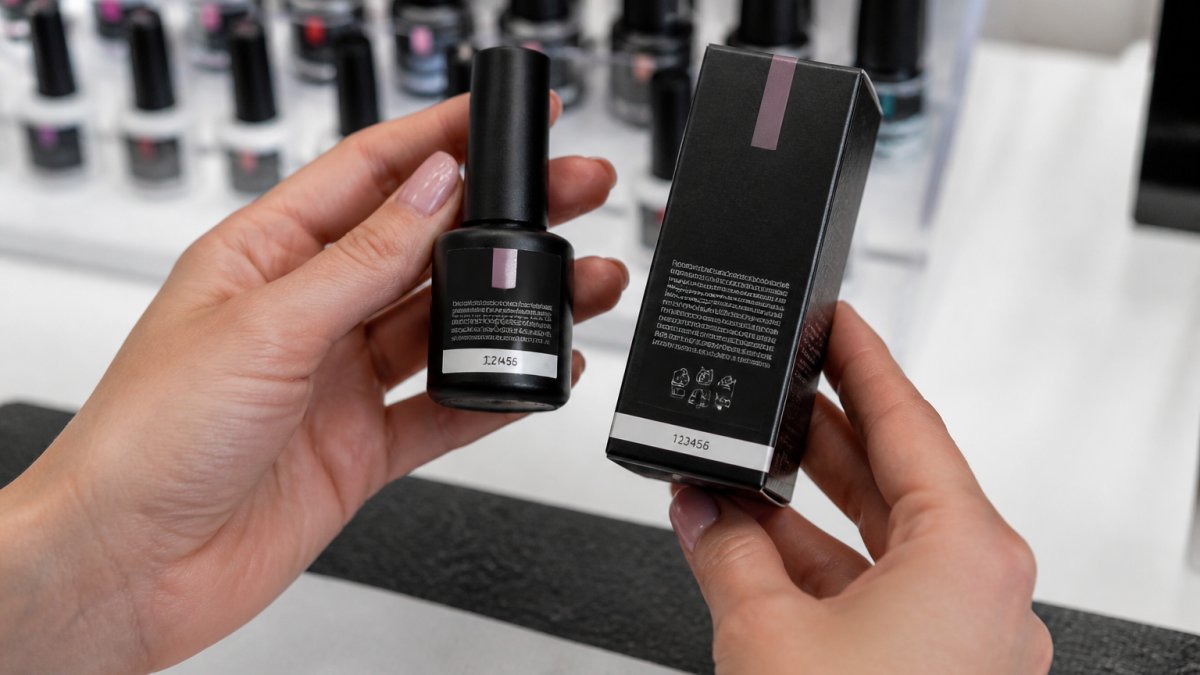
We know what genuine packaging feels like, and we know the shortcuts counterfeiters take. Below, we'll show you exactly what to inspect, in order, so you can spot a fake in seconds.
A common mistake is judging by the bottle photo alone. Counterfeiters copy photos well. They rarely copy print quality, label alignment, or batch codes with the same care.
Label Alignment, Print Quality, and Legible Text
Real brands print clean, straight labels. Check these details:
- Alignment: The label should sit straight, with even margins on all sides.
- Print quality: Text should be sharp, not fuzzy or slightly blurred.
- Legibility: Ingredient lists and warnings must be easy to read, even in small type.
If the label looks crooked, faded, or smudged, treat it as suspicious. Genuine manufacturers use controlled printing, not cheap reprints.
Bottle, Cap, and Brush Quality Checks
The bottle itself tells a story. Look for:
- Even glass or plastic: No seams, bubbles, or rough edges.
- A cap that fits flush: No wobble, no gaps, no cheap plastic feel.
- A straight, full brush: Bristles should be even and firmly set.
Counterfeit bottles often feel lighter and cheaper in the hand. The cap may not click shut properly.
How to Spot Fake Nail Products Using Batch Codes and Barcodes
Batch codes can help you spot fake nail products. Many professional products carry a batch code, a short string of letters and numbers printed on the bottle, box, or both.
Here is how to check:
- Find the batch code on the bottle or box.
- Confirm the code matches on both the bottle and the outer box.
- Check that the code is printed cleanly, not hand-scrawled or stuck on a sticker.
- Scan the barcode and confirm it links to the correct product and brand.
- Compare the code format against official brand information.
A mismatch between bottle and box is a serious red flag. So is a batch code that looks printed over the original label.
Nail Product Batch Code Verification: Contacting the Manufacturer
Nail product batch code verification goes one step further than reading the label: ask the brand directly. Most professional brands publish a contact form, customer service email, or regional distributor contact on their official website. The key is to send a message the brand can actually act on, and to keep the reply as a record.
What to Include in a Verification Request
A vague email ("Is this real?") usually gets a vague answer. Send a structured request instead:
- Product name and shade or SKU exactly as printed on the label.
- Batch code as it appears on the bottle and on the outer box, noted separately if they differ.
- Photos of the front label, the batch code area, the barcode, and the box seam.
A brand that can verify its products will usually be able to confirm the code format and the seller status.
Watch out: a brand confirming a batch code format does not always confirm that specific unit is genuine. Ask specifically whether the code was issued for that shade and production run, not just whether the format looks correct.
Batch Code Checks by Product Type
The same verification logic applies across a salon's stock, but the details differ by product type. Use this checklist as a practical verification pass:
- Gel polish and lacquer: Batch code should appear on both bottle and box, printed cleanly, not on a sticker applied over the original label. Check the fill line and cap seal.
- Acrylic powders and liquids: Look for a batch code and a production or expiry date on the container and the outer packaging. Powders should be free-flowing with no clumping; liquids should not show separation or sediment.
- Builder and base gels: Confirm the batch code matches across jar and box, and check that the label states the correct volume and cure requirements.
When the Batch Code Does Not Match
A mismatch between bottle and box is a serious red flag. So is a batch code printed over the original label, a code that uses a different font or spacing than the rest of the label, or a code that the brand says was never issued.
Keep the brand's reply, your photos, and your order record together. If a product ever causes a reaction or a service issue, that file is your proof of provenance and your basis for a refund or report.
How to Read a Nail Product SDS for Safety and Provenance
A Safety Data Sheet, or SDS, is a document that lists a product's hazards, ingredients, handling, and storage requirements. Professional brands publish an SDS for each product line, usually on their official site.
Read it for three things:
- Ingredient disclosure: The formula should match what the label claims.
- Manufacturer details: A real company name and address should appear.
- Revision date: An up-to-date SDS signals an active, accountable brand.
If a seller cannot point you to an SDS, that is a warning sign. Genuine professional products come with documentation.
Buying From Authorized Nail Product Retailers and Spotting Seller Red Flags
The safest way to avoid fakes is to buy from authorized nail product retailers. These are sellers the brand has approved to stock and sell its products.
Watch for these seller red flags:
- Prices far below every other seller
- No business address or contact details
- Stock photos instead of real product images
Marketplace listings deserve extra care. Check the seller's history and reviews, and confirm the brand lists them as authorized.
You can browse professional nail tools from a retailer that stands behind what it sells.
Check the Formula: Color, Texture, Odor, and Ingredient Quality
Once the product is in your hands, the formula confirms what the packaging promised. Genuine gel polish behaves predictably.
Check these four signs:
- Color: Should match the swatch and apply evenly, with no separation.
- Texture: Smooth and consistent, not gritty, lumpy, or watery.
- Odor: Professional formulas have a mild, familiar scent, not a harsh chemical smell.
Ingredient quality matters too. Some professional brands offer HEMA-free and TPO-free options. A genuine label states this clearly and accurately.
If you want to compare against real products, you can shop professional nail art supplies and check the label details yourself.
Watch out: a product that smells unusually strong or irritates the skin during application should be set aside.
What to Do If You Suspect a Counterfeit Nail Product
Stop using the product first. Do not apply it to a client or yourself until you have confirmed it is genuine. Unverified formulas may not match their labeling, so they can carry risks that the label does not disclose.
Then work through these steps in order. The goal is to protect your client, preserve evidence, and get your money back.
1. Preserve the Evidence Before You Dispose of Anything
- Photograph the bottle, box, label, batch code, barcode, and any seal or sticker, in good light.
- Keep the packaging and any receipt, order confirmation, or shipping label. Do not throw the box away.
- Save the listing by screenshotting the product page, seller name, price, and description before the seller edits or removes it.
Watch out: once you apply a suspect product, you lose the ability to test it cleanly and you expose yourself or a client to risk. Check before you use, not after.
2. Contact the Brand and the Manufacturer
Send the brand the same structured request described in the batch-code section: product name, shade, batch code, photos, and purchase details. Ask them to confirm whether the code was issued and whether the seller is authorized. Keep their reply. If the brand confirms the product is counterfeit, ask whether they want the unit returned or want the seller reported.
3. Report the Seller and the Listing
- On marketplaces: use the platform's report-listing or report-seller function, and select the counterfeit or intellectual-property option if available. Attach your photos and the brand's reply.
- On social commerce: report the post or shop through the platform's reporting tools, and avoid direct messages that move the conversation off-platform.
- To the brand: many brands have a counterfeit-reporting address or form on their official site. Reporting helps them track which sellers are distributing fakes.
4. Request a Refund and Keep the Record
Request a refund in writing through the platform's dispute process, not by direct message alone. Reference the brand's confirmation if you have it. Keep the product until the dispute is resolved, then dispose of it safely: do not pour liquids down the drain or mix them with regular waste if the label lists hazardous ingredients. Follow local household hazardous waste guidance.
5. Replace With a Verified Product
Restock from an authorized seller and re-run the packaging, batch-code, and formula checks on the replacement.
For a quick reference, here is the full verification process at a glance:
| Check | What to Look For | Red Flag |
|---|---|---|
| Label | Straight, sharp, legible | Crooked, blurry, smudged |
| Bottle and cap | Flush fit, even material | Wobble, seams, light weight |
| Batch code | Matches on bottle and box | Mismatch or sticker code |
| Barcode | Links to correct product | Wrong or missing listing |
| SDS | Available from brand | Seller cannot provide one |
| Seller | Authorized, real address | Prices too low, no contact info |
| Formula | Smooth, even, mild odor | Gritty, watery, harsh smell |
If you are replacing suspect products, you can compare the best professional nail art tools to restock with confidence.
Stock Your Salon With Verified Products From Hotlines Beauty
Running a salon means you cannot afford a bad batch. One counterfeit bottle can cost you a client, a service, or worse, a reaction.
We built Hotlines Beauty to make verified products easy to get. Our catalog includes brands like Kokoist, Nail Thoughts, and Tammy Taylor.
Here is what you get when you order from us:
- Free local delivery on qualifying orders with a $20 minimum
- A curated range of gel polishes, soft gel essentials, and nail art tools
The EnVogue Base Coat is a HEMA-monomer free soft gel base coat designed for strong adhesion.

Ready to restock with products you can trust? You can pick up Envogue Builder In A Bottle and other salon essentials from our verified catalog.

Frequently Asked Questions
How can you tell if a nail product is authentic?
Check the packaging first: crisp label printing, aligned text, a legible batch code, and a sealed bottle with no leaks or residue. Then verify the batch code with the manufacturer and confirm the seller is an authorized nail product retailer. Authentic gel polish should also have a consistent texture and no harsh solvent smell. If any detail looks off, treat it as suspicious until the brand confirms it.
Can a product's batch code help confirm that it is authentic?
Yes. A batch code identifies the production run and lets the manufacturer trace the product. Contact the brand with the code and ask whether it matches their records. Counterfeiters often reuse codes, print them crookedly, or omit them entirely. Keep the bottle and receipt so the brand can verify quickly. If the manufacturer cannot confirm the code, do not use the product on clients.
What should you do if you suspect a nail product is counterfeit?
Stop using it immediately, especially on clients. Keep the bottle, packaging, and receipt as evidence. Report the seller to the marketplace or platform, and notify the brand so they can investigate. If a client had an allergic reaction or skin irritation, document it and recommend they see a doctor. Replace the product with a verified item from an authorized retailer before resuming services.
How do you read a nail product SDS?
An SDS lists the product's ingredients, hazards, first-aid measures, and safe handling instructions. Check that the manufacturer name and contact details are present, the ingredients match the label, and the revision date is recent. For professional gel polish, look for HEMA and TPO information if you or your clients have sensitivities. An SDS is a safety document, not a marketing sheet, so missing sections are a warning sign.
Counterfeit products are a real risk for any nail professional, but a few careful checks protect your clients and your reputation. At Hotlines Beauty, we stock professional-grade gel polishes and tools from trusted brands, with free local delivery on qualifying orders and a $20 minimum. Get started with Hotlines Beauty and restock your salon with products you can verify before they ever reach your table.
